If you own on the Westside and keep asking yourself whether more space, more privacy, and a more self-contained daily routine might be worth a different commute, Calabasas probably deserves a closer look. For many luxury owners, this is not about leaving one prestige market for another. It is about deciding whether your next chapter calls for a different kind of luxury. In this guide, you’ll see where Calabasas stands out, what trade-offs come with the move, and how to think about value if you are comparing it with Brentwood, Beverly Hills, or Pacific Palisades. Let’s dive in.
Calabasas Is a Lifestyle Pivot
Calabasas sits in the southwestern San Fernando Valley, about 22 miles northwest of downtown Los Angeles, between the foothills of the Santa Monica and Santa Susanna Mountains. The city spans 13.3 square miles, and its development pattern helps explain why many buyers see it differently from older Westside enclaves.
According to the city profile, development did not accelerate until the late 1960s, and fewer than 200 buildings predate 1960. In practical terms, that often translates into a housing mix that feels newer in character than many long-established Westside estate areas.
That difference matters if you are weighing quality of life, not just address. Calabasas is best understood as a lifestyle pivot toward larger parcels, gated settings, open-space access, and a more contained day-to-day rhythm.
What Luxury Inventory Looks Like
For many buyers, The Oaks is the clearest snapshot of Calabasas luxury. Over the three months ending March 2026, Redfin reported a median sale price of $9.1 million, a median sale price per square foot of $979, and average days on market of 124.
The sold range tells the story well. Recent transactions included a 4,259-square-foot home on a 0.25-acre lot for $3.91 million, a 6,745-square-foot home on a 21,047-square-foot corner lot for $6.0 million, a 5,968-square-foot home on 0.6 acre for $8.9 million, and a 12,911-square-foot home for $10.55 million.
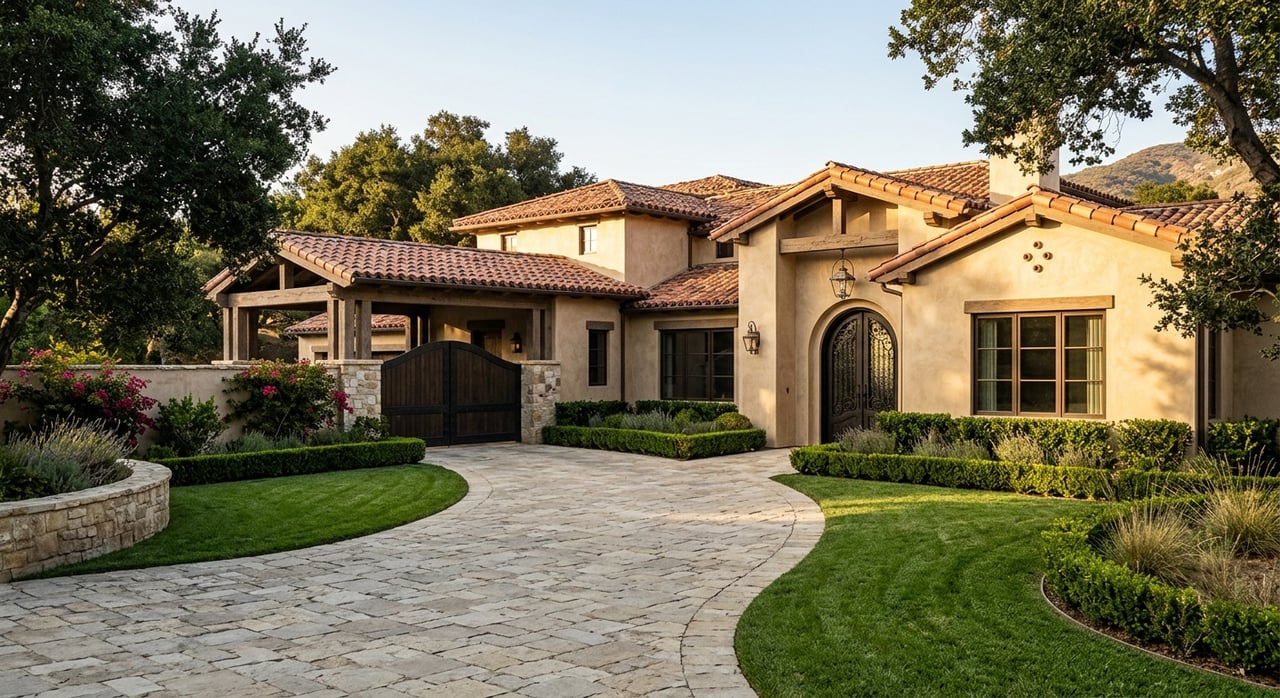
If you are coming from the Westside, the key takeaway is not just price. It is product type. Calabasas luxury often reads as gated, lot-forward, and relatively recent in age, especially in communities where 2000s-era construction is common.
Why Space Is a Big Part of the Appeal
Westside owners often start the search with one simple question: what do you really gain if you go inland? In Calabasas, the answer is often more usable land, more separation from neighbors, and a property that feels more compound-like.
A good example is 25431 Prado De Las Fresas in The Oaks, which sold for $6.0 million on March 31, 2026. The home offered 6,745 square feet on a 21,047-square-foot corner lot behind a 24-hour manned gate.
Another is 25530 Prado De Azul, which sold for $8.9 million on June 15, 2026. It offered 5,968 square feet on 0.6 acre in the same gated community, showing that upper-tier Calabasas inventory can still deliver meaningful land.
If acreage is part of your search, 959 Crater Oak Drive in Monte Nido adds another lens. That property sold in September 2025 for $3.7 million and offered 3,122 square feet on 0.9885 acre, with a 1968 build renovated in 2025.
How Calabasas Compares With Westside Value
The smartest way to compare Calabasas with the Westside is not by asking which market is better. It is by asking what kind of luxury you want to prioritize.
A Brentwood sale helps frame that trade. At 11912 W Sunset Boulevard, a home sold in January 2025 for $6.7 million. It offered 6,770 square feet on 15,266 square feet of land, or about 0.35 acre, and was built in 2013.
Compared with the $6.0 million Oaks sale above, the interior scale is similar, but the Calabasas property had a larger lot and a lower price. That does not make one option superior. It simply highlights how Calabasas can deliver a different value equation.
The same pattern shows up higher up the market. In Pacific Palisades, 800 Greentree Road sold in November 2025 for $10.5 million with 5,364 square feet on 0.28 acre. In Beverly Hills, 1154 Summit Drive sold in July 2025 for $12.5 million with 8,032 square feet on 0.46 acre, in a home built in 1964.
Taken together, these examples support a clear conclusion. Calabasas is not a discount version of Beverly Hills, Brentwood, or Pacific Palisades. It is a different luxury trade where many buyers gain more land, more gates, and often newer-feeling housing stock in exchange for a more freeway-dependent location.
Amenities That Support Daily Life
One reason Calabasas keeps coming up for move-up and move-over buyers is that daily life can feel efficient. The Commons at Calabasas is central to that story.
Caruso describes The Commons as a 215,000-square-foot center with 22 retailers and 13 restaurants. Since opening in 1998, it has functioned as the community’s de facto town square, giving residents a concentrated place for dining, shopping, and errands.
That setup feels different from the Westside pattern of stitching together multiple stops across a broader urban area. If you value a more self-contained lifestyle, Calabasas offers a strong case.
Recreation Is Part of the Package
Calabasas also stands out for its recreation mix. The city’s Community Center offers open-play pickleball, basketball, volleyball, weight-room access, classes, and rentals.
The Tennis & Swim Center adds aquatics programs, tennis courts, and swim lessons. The city’s planning materials also note that the Trails Master Plan is intended to create a continuous pedestrian, equestrian, and bicycle trail system connected to open spaces and nearby regional parks.
For buyers who want their home base to feel more active and outdoor-oriented, that matters. It reinforces the idea that Calabasas is not just a residential choice, but a daily-living choice.
Club Lifestyle Adds Another Layer
If a club-centered routine is important to you, Calabasas offers that dimension as well. Calabasas Country Club describes itself as a championship golf course designed by Robert Trent Jones Sr. and Jr.
The club also includes a performance center, a short-game area, a natural-grass driving range, and a 6,000-square-foot fitness center. For some buyers, this kind of amenity stack supports the appeal of a property that feels more like a private retreat than a city address.
The Main Trade-Off Is the Commute
This is the part that should be evaluated honestly. Calabasas is not a substitute for beach-adjacent convenience or central Westside access.
The city’s directions to the civic center route drivers from Los Angeles onto Highway 101 North and the Parkway Calabasas exit. LA Metro also identifies the I-405 Sepulveda Pass between I-10 and US-101 as one of the region’s most heavily traveled corridors.
In real terms, your access back to the Westside usually depends on the 101 and 405 funnel. If your work, school schedule, or social life requires frequent, time-sensitive trips to Beverly Hills, Brentwood, Santa Monica, or the Palisades, that should be part of your decision, not an afterthought.
Who Calabasas Usually Fits Best
Calabasas tends to make the most sense when you are making an intentional trade. You are not trying to replicate the Westside with a different ZIP code.
Instead, you may be looking for:
- More land and outdoor space
- Gated community options
- A home that feels newer in age or layout
- Concentrated daily amenities
- Recreation and trail access tied to open space
- A more private, compound-oriented lifestyle
If those priorities rank above immediate Westside proximity, Calabasas can be a very compelling next move.
How to Think About Your Next Step
For high-value owners, the decision usually comes down to alignment. Does your current lifestyle still match your current location, or are you paying a premium for proximity you no longer use in the same way?
That is where a market-specific analysis matters. Looking only at headline prices can miss the real question, which is how lot size, home age, gated access, commute patterns, and amenity concentration fit your next chapter.
If you are weighing a sale on the Westside and a purchase in Calabasas, a tailored comparison can clarify the trade quickly. The strongest outcomes usually come from understanding both the emotional and financial side of the move before you act.
When you are ready to explore that next step with discretion and market clarity, connect with Neyshia Go for a confidential consultation.
FAQs
Is Calabasas a good fit for Westside luxury homeowners?
- Calabasas can be a strong fit if you want more land, gated options, newer-feeling inventory, and concentrated amenities, and you are comfortable with a more freeway-dependent commute.
How does Calabasas luxury real estate compare with Brentwood?
- Based on the sales in the research set, Calabasas can offer similar interior scale with larger lots and lower pricing in some cases, but the trade-off is less direct Westside access.
What is The Oaks in Calabasas known for?
- The Oaks is known as a gated luxury enclave where recent sales show large homes, meaningful lot sizes, and a median sale price of $9.1 million over the three months ending March 2026.
What amenities make Calabasas attractive to luxury buyers?
- Key amenities include The Commons at Calabasas, the Community Center, the Tennis & Swim Center, trail-connected recreation, and the Calabasas Country Club.
What is the biggest trade-off when moving from the Westside to Calabasas?
- The biggest trade-off is usually commute convenience, since access to the Westside often depends on the 101 and 405 corridors.
Does Calabasas offer newer-feeling luxury homes than some Westside areas?
- In many cases, yes. The city profile notes that development did not accelerate until the late 1960s, and fewer than 200 buildings predate 1960, which helps explain why parts of the luxury inventory can feel newer in character.