What makes one BHPO estate command a far higher price than another just a few turns away? In Beverly Hills Post Office, the answer often starts with the land itself. If you are buying, selling, or evaluating a luxury property here, understanding how canyon topography shapes privacy, views, design, and build potential can give you a much clearer read on value. Let’s dive in.
BHPO Is a Hillside Market First
Beverly Hills Post Office is often discussed alongside Beverly Hills, but from a planning and land-use standpoint, it is better understood as a Los Angeles hillside market. SurveyLA places BHPO within the Bel Air-Beverly Crest Community Plan area on the southern slopes of the Santa Monica Mountains. That matters because the area shares the same steep terrain, winding roads, and non-grid street pattern that define nearby canyon neighborhoods.
This is more than a geographic footnote. It helps explain why BHPO homes trade on a different value logic than homes in Beverly Hills proper. In BHPO, the terrain creates the product.
Why BHPO Differs From the Beverly Hills Flats
The Beverly Hills Flats and BHPO may sit close to one another, but they are not the same real estate category. The City of Beverly Hills separates its single-family housing areas into Central, Hillside, and Trousdale Estates, with different minimum lot sizes and rules by area. That framework underscores a key point: flat lots and hillside parcels are fundamentally different housing products.
In the Flats, value often centers on lot depth, block reputation, lawn space, and rebuild potential. In BHPO, value is more likely to turn on slope, pad usability, privacy from the street, and the quality and permanence of the view.
Topography Creates Scarcity
In luxury real estate, scarcity supports value. In BHPO, canyon terrain creates scarcity in several ways at once.
First, there are fewer easy-to-build sites. Steep slopes, irregular lot shapes, and access challenges can limit the number of parcels with broad, usable pads. That alone can separate one street from another.
Second, the terrain often creates privacy. A gated approach, a home set above or below the street, or a parcel tucked into a canyon can reduce direct visibility. For many luxury buyers, that sense of retreat is a major part of the appeal.
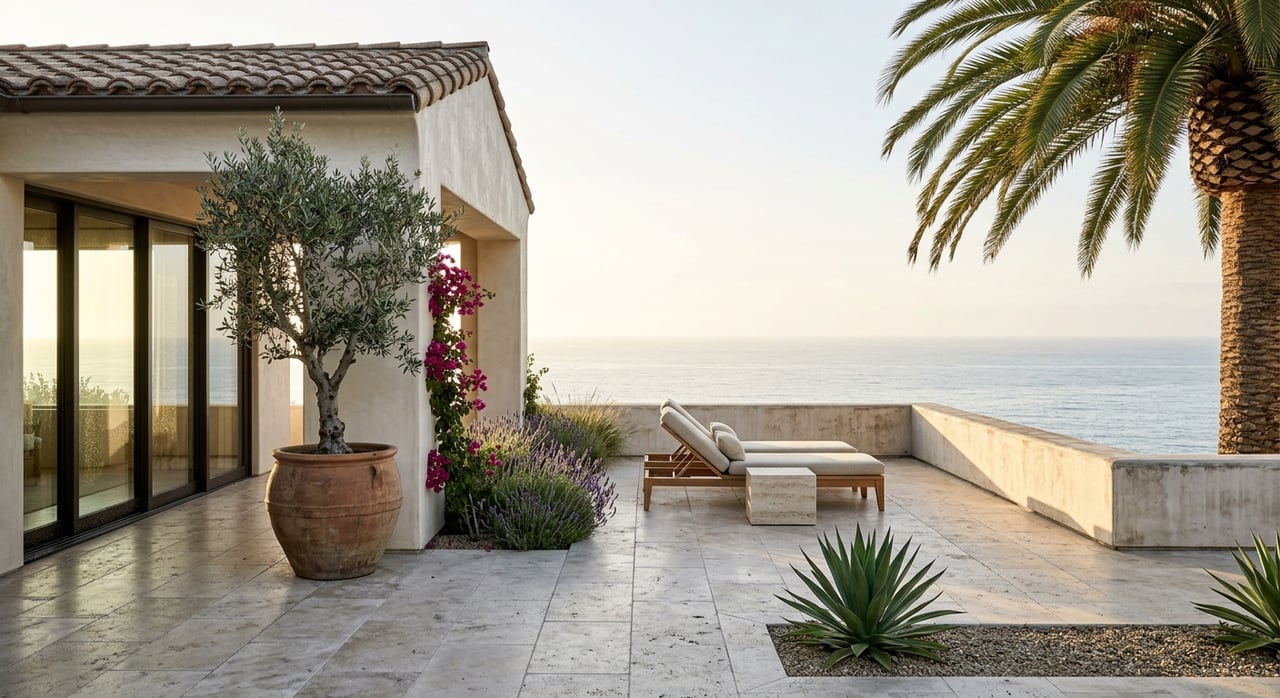
Third, elevation can unlock open views. BHPO properties frequently market panoramic canyon, city, or ocean vistas, and those sightlines can have a direct effect on desirability. SurveyLA notes the long-standing premium attached to view lots in this hillside area, a legacy that still shapes pricing today.
The Main Value Drivers in BHPO
If you are trying to understand what drives estate value in BHPO, focus on micro-location rather than the mailing address alone. Within one neighborhood, the difference between ridge, canyon, and sheltered hillside settings can be significant.
Ridge vs. Canyon Position
A ridgeline or elevated position may offer broader sightlines and a greater sense of visual openness. In many cases, that can support higher pricing, especially when the view feels expansive and hard to obstruct.
A canyon setting can also be highly valuable, but often for a different reason. Enclosed lots may trade more on seclusion, mature landscaping, and a quiet, tucked-away feel than on sweeping outlooks.
View Corridor vs. Enclosed Lot
Not all views carry the same weight. A property with a wide and established corridor over canyon, city lights, or distant water may command a premium that an inward-facing or heavily screened lot does not.
At the same time, some buyers prioritize privacy over panorama. That is why BHPO pricing can vary so widely even among homes that share a similar square footage or bedroom count.
Gated Approach and Street Exposure
How a home is experienced from the street matters. A private drive, limited visibility, and a controlled arrival sequence can enhance perceived exclusivity.
By contrast, a more exposed frontage may reduce that sense of retreat. In BHPO, the arrival experience is often part of the asset.
Buildability and Entitlement Friction
Luxury buyers and sellers also need to account for what the site can realistically support. In hillside neighborhoods, value is not only about what is there now. It is also about what can be improved, expanded, or rebuilt within the rules.
Parcels with fewer apparent obstacles may be more attractive than lots with heavier design constraints, difficult grading issues, or more visible exposure to scenic controls. This is where local planning context becomes essential.
Hillside Rules Shape the Product
Los Angeles hillside standards can influence setbacks, slope analysis, retaining walls, and grading. For properties near Mulholland Drive, the Mulholland Scenic Parkway framework adds another layer, with guidelines meant to preserve views, maintain natural hillside character, and support lower-intensity development.
Those rules can shape design in very practical ways. Homes may need to work with the slope instead of forcing a flat-lot solution onto a hillside parcel.
What Architecture Performs Best in BHPO
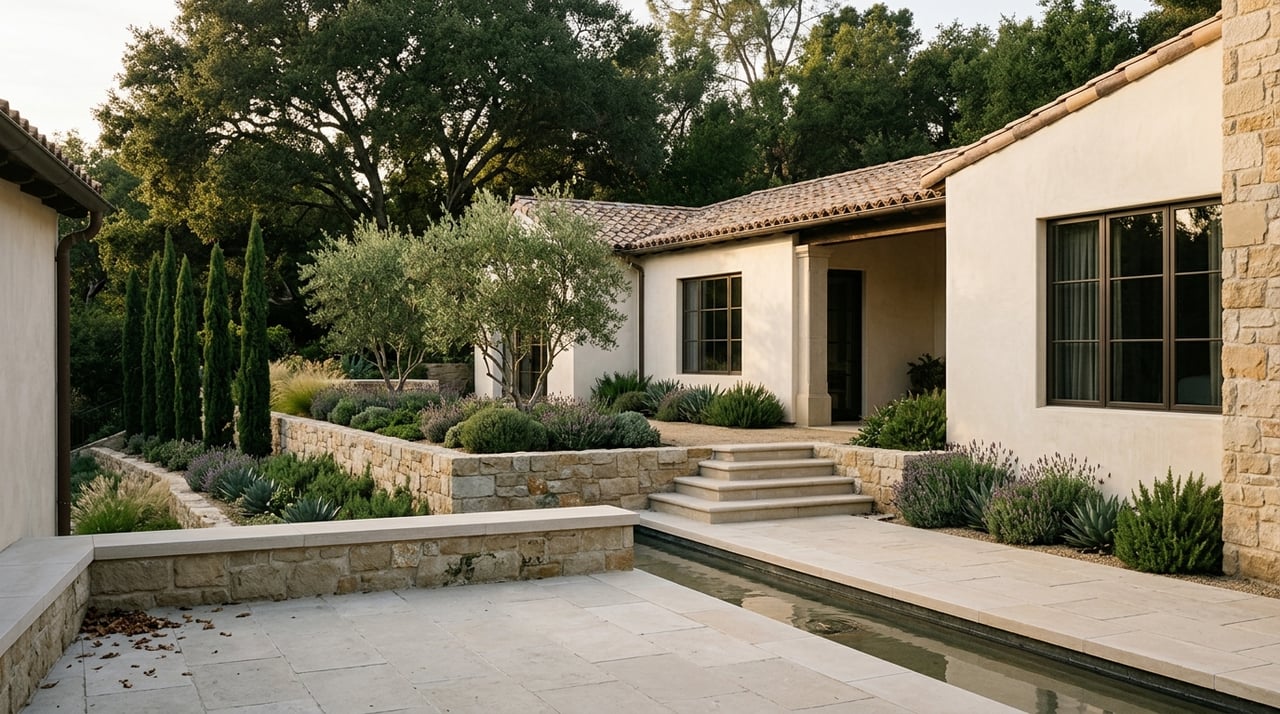
Because of the terrain and the rules, BHPO often rewards architecture that responds to the site. Lower-profile massing, terraced forms, walls of glass, layered indoor-outdoor spaces, and carefully managed grading are all common features in hillside product.
That is one reason contemporary and mid-century homes often feel so natural here. They can take advantage of elevation, frame views, and create strong privacy without relying on the same planning logic you might see on a flatter estate parcel.
Listings across streets like Mulholland, Wonderland Park, Summitridge, Franklin Canyon, and Benedict Canyon reflect that pattern. The recurring themes are consistent: gated entries, balconies or decks, view-oriented living areas, and layouts designed around the topography.
BHPO Price Ranges Show Wide Dispersion
One of the clearest signs that canyon factors matter is the price spread within BHPO itself. Redfin’s March 2026 snapshot shows a median sale price of $2.99 million and median days on market of 58.5, while the neighborhood’s current view-listing page shows a median list price of $4.35 million.
The asking-price range is especially revealing. Current BHPO listings span from $1.399 million on Westwanda Drive to $69.995 million on Davies Drive, with other high-end asks including $39 million on Davies Drive, $18 million on Bowmont Drive, $16.799 million on Angelo Drive, and $15.995 million on Hazen Drive.
That kind of spread tells you that BHPO is not one uniform market. It is a collection of micro-markets shaped by street, site, access, privacy, and view quality.
Recent Sales Reinforce the Micro-Location Story
Sold properties show the same pattern. Recent BHPO sales include $2.3 million on Benedict Canyon Drive, $3.695 million on Benedict Canyon Drive, $6.4 million on Clear View Drive, $9.5 million on Maybrook Drive, $11.15 million on Oak Pass Road, $17.1 million on Hidden Valley Road, $18 million on Oak Pass Road, and $3.595 million on San Ysidro Drive.
The difference between these numbers is too large to explain by square footage alone. The stronger explanation is that buyers are underwriting the full package: lot utility, privacy, topographic drama, architectural fit, and the durability of the setting.
How BHPO Compares With the Flats
The Beverly Hills Flats still command serious premiums, but the drivers are different. Recent examples in the Flats include a sale at $7.7 million on Foothill Road on a flat lot of just over 14,200 square feet and a $10.495 million sale on Sierra Drive described as being on a prime tree-lined street.
That points to a different value framework. In the Flats, street prestige, lot dimensions, and traditional estate planning often do more of the work than dramatic elevation or canyon views.
For a buyer, this means BHPO and the Flats should not be judged by the same checklist. For a seller, it means your marketing strategy should reflect the specific strengths of the site rather than relying on a nearby ZIP code comparison.
Bel Air Offers a Useful Comparison
Bel Air is one of the best comparison markets for BHPO because it shares the same canyon-and-ridgeline logic, often at an even larger estate scale. Redfin’s April 2026 Bel Air snapshot shows a median sale price of $3.17 million, with listings ranging from $2.595 million to $400 million.
High-profile asks include $400 million on Chalon Road, $99.95 million on Bel Air Road, $65 million on Chalon Road, and $11.995 million on Stonehenge Lane. Recent sold examples include $22.5 million on Siena Way and $9.3 million on Chalon Road.
The takeaway is not that BHPO is Bel Air. It is that both markets reward a nuanced reading of hillside value, where the lot and setting often matter as much as the structure.
What Luxury Buyers Should Look For
If you are buying in BHPO, try to evaluate the site before you fall in love with the interiors. The home matters, but the land often drives long-term value.
Key questions to consider include:
- How private is the approach from the street?
- How broad and durable is the view corridor?
- How usable is the outdoor space on the actual pad?
- Does the architecture feel native to the slope?
- Are there visible signs of heavy grading or retaining-wall dependence?
- Is the property near areas with added scenic review considerations?
These questions can help you separate a visually impressive listing from a truly strong hillside asset.
What Luxury Sellers Should Understand
If you are selling in BHPO, your value story should be specific. Buyers at this level are not only comparing finishes and square footage. They are comparing exposure, access, privacy, and how convincingly the home captures its site.
That means presentation matters. A property with a gated drive, strong view orientation, and well-composed indoor-outdoor flow should be marketed around those features with precision. In BHPO, the narrative should explain why this lot, on this street, delivers an experience that another hillside parcel may not.
Why BHPO Value Is Hyperlocal
The strongest way to understand BHPO is to see it as a market where topography shapes the product at every level. The road pattern, the buildable pad, the arrival sequence, the view corridor, and the planning framework all feed into value.
That is why two homes with the same BHPO mailing address can live in very different pricing tiers. In this market, luxury value is rarely just about the house. It is about how the canyon, ridge, or hillside setting supports a rare and defensible offering.
If you are evaluating a BHPO estate, a tailored, street-level reading of the property is essential. For discreet guidance on positioning, acquisition, or pricing in Los Angeles luxury micro-markets, connect with Neyshia Go.
FAQs
How does canyon topography affect BHPO home values?
- Canyon topography can increase value by creating scarcity through limited buildable pads, added privacy, and the potential for open canyon, city, or ocean views.
Is Beverly Hills Post Office the same as Beverly Hills proper?
- No. The research places BHPO within the Los Angeles hillside context of the Bel Air-Beverly Crest Community Plan area rather than Beverly Hills city proper.
Why do BHPO prices vary so much from street to street?
- BHPO pricing is heavily influenced by micro-location factors such as ridge versus canyon position, view quality, privacy, gated access, and the relative ease or difficulty of working with the site.
How are BHPO estates different from homes in the Beverly Hills Flats?
- BHPO estates are typically shaped by hillside terrain, view orientation, and privacy, while Flats properties more often derive value from flatter lots, block prestige, lot depth, and rebuild potential.
Do Mulholland-area rules matter for BHPO luxury properties?
- Yes. Properties near Mulholland Drive may be affected by scenic parkway guidelines that emphasize view preservation, natural hillside character, and limits on grading and retaining walls.